When people choose artificial grass, most of their focus goes on how it looks (colour, softness, how realistic it looks, etc.). But in reality, the most important part of the one they don’t often see: the artificial grass base or foundation beneath the turf.
Here’s why what goes underneath your grass determines whether your artificial lawn stays flat, drains properly, and performs for years — or slowly develops problems after the installers have left.
Artificial Grass Doesn’t Hide Poor Preparation
Artificial grass itself is only the surface finish, not the actual structural solution.
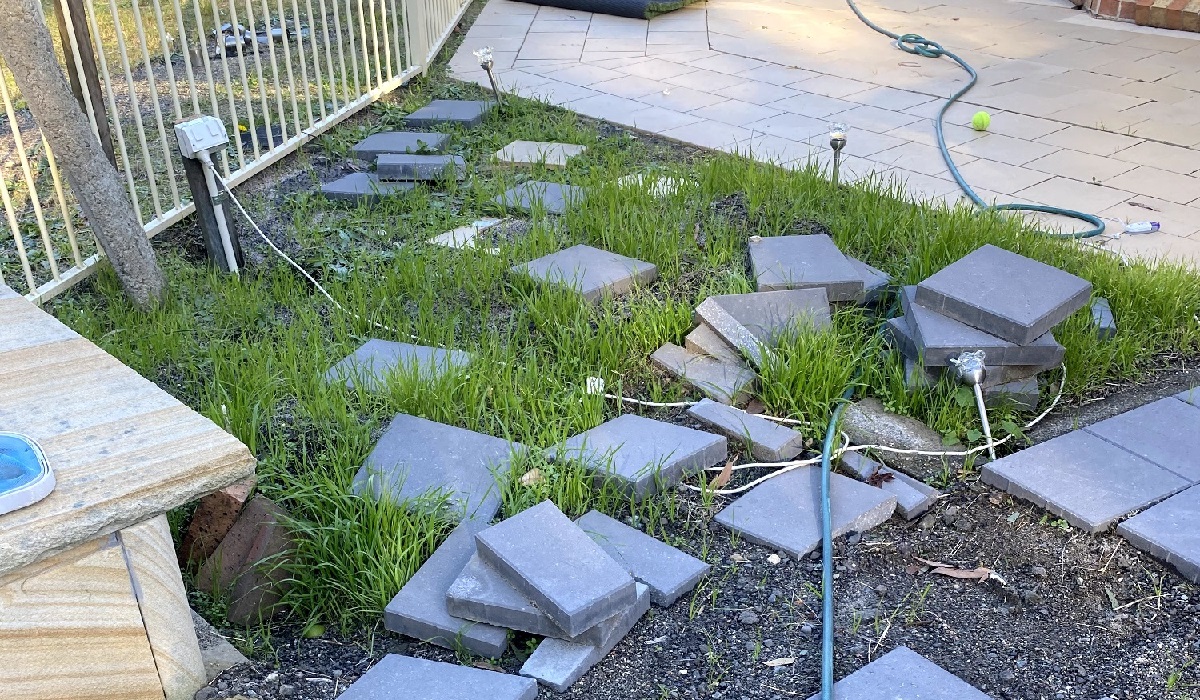
If the ground beneath it isn’t prepared correctly, the grass will eventually reflect whatever problems exist underneath, including:
- Uneven ground
- Soft or unstable areas
- Poor drainage
- Movement over time
These issues rarely appear immediately. They develop gradually as the base settles, water moves through the area, and the lawn experiences everyday use.
That’s why many artificial grass problems don’t show up for 6 to 12 months after installation.
The Purpose of a Proper Base
A correctly built base under artificial grass has three main jobs:
- Stability – preventing movement, sinking, or rippling
- Drainage – allowing water to flow away efficiently
- Longevity – supporting the grass over many years of use
If any one of these is compromised, the surface above will eventually show it.
Excavation Depth: Why “Enough” Is Never a Guess
One of the most common shortcuts in artificial grass installation is inadequate excavation.
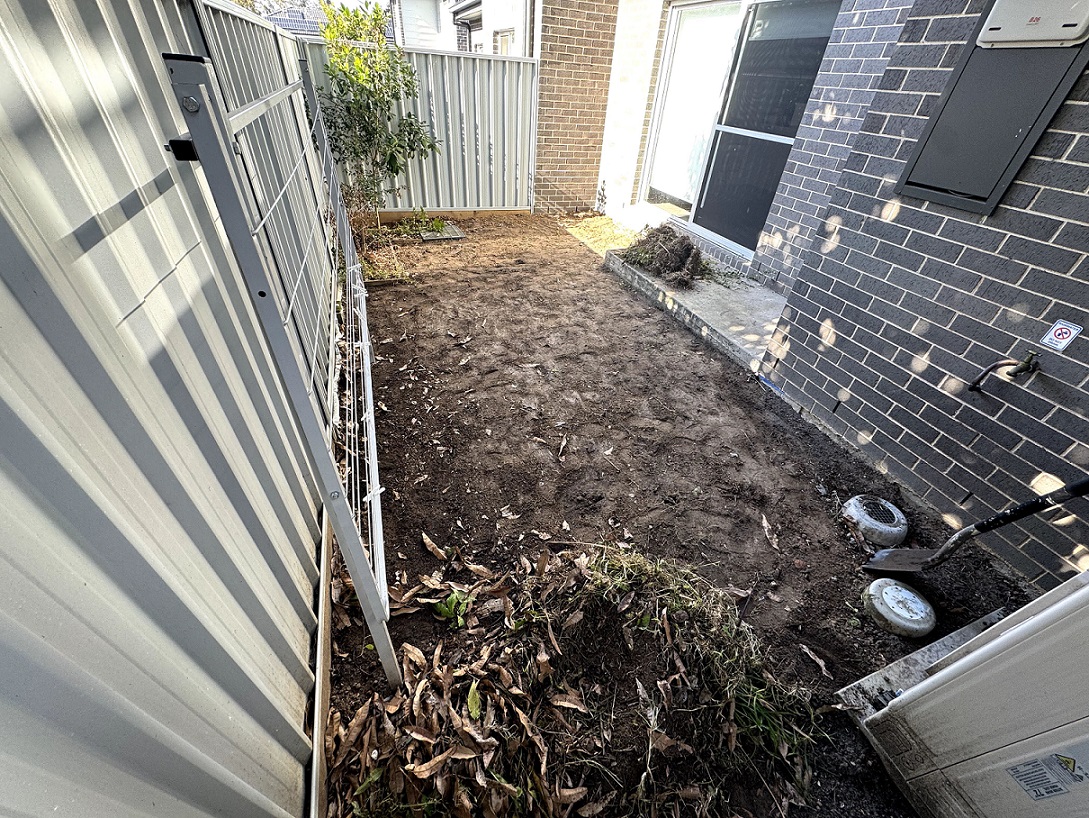
But why remove a layer of earth before laying artificial grass? You need to have this done in order to:
- Eliminate unstable soil
- Allow space for a properly compacted base for the artificial turf
- Prevent weeds and other wildlife from pushing through
There really is no one-size-fits-all excavation depth. Typically, it can be anywhere between 50 mm and 100 mm. However, this will still depend on your site’s conditions and the type of foundation (i.e., road base vs bedding sand) your artificial grass will need.
Removing too little soil might save time initially, but it leaves:
- Organic material that continues to break down
- Soft ground that shifts over time
- Limited room for a proper base layer
Determining the proper excavation depth isn’t guesswork; this is something only a knowledgeable and experienced artificial grass installer can do.
Base Materials: Not All Bases Behave the Same
The type of base material used under artificial grass makes a major difference to how the lawn performs long-term.
Some materials are easy to spread and level, but don’t compact into a truly solid layer. Others interlock and harden easily, creating a much more stable foundation.
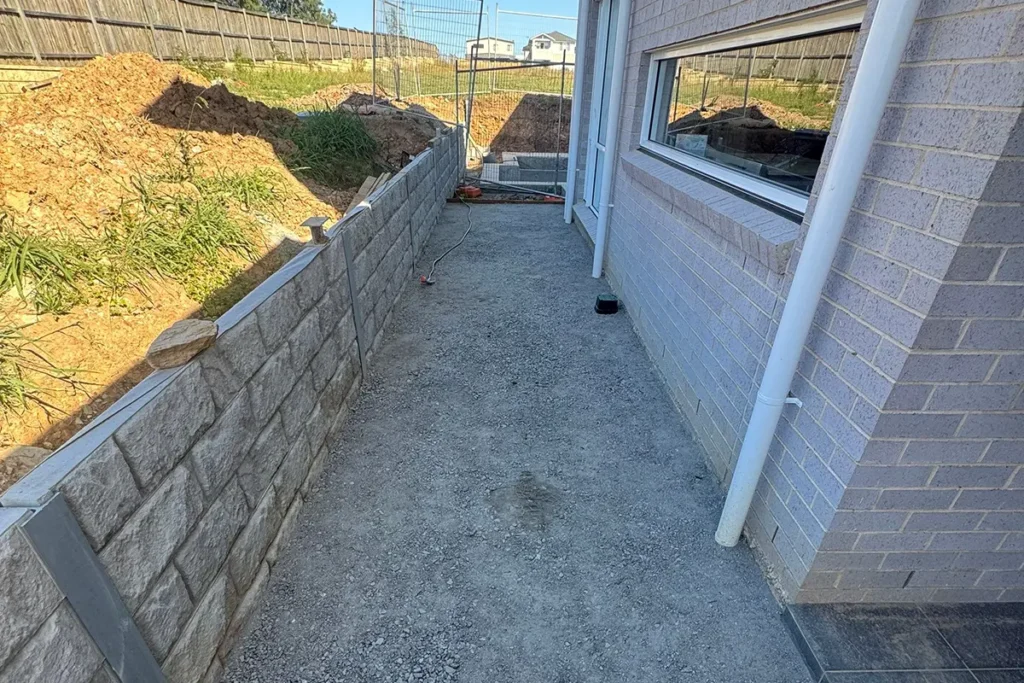
Over time, weaker bases can:
- Loosen
- Shift after heavy rain
- Fail to hold fixings securely
A quality base should compact into a firm, stable layer that supports the grass and holds its shape, not just days after installation, but years later.
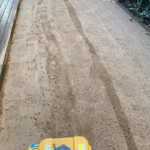
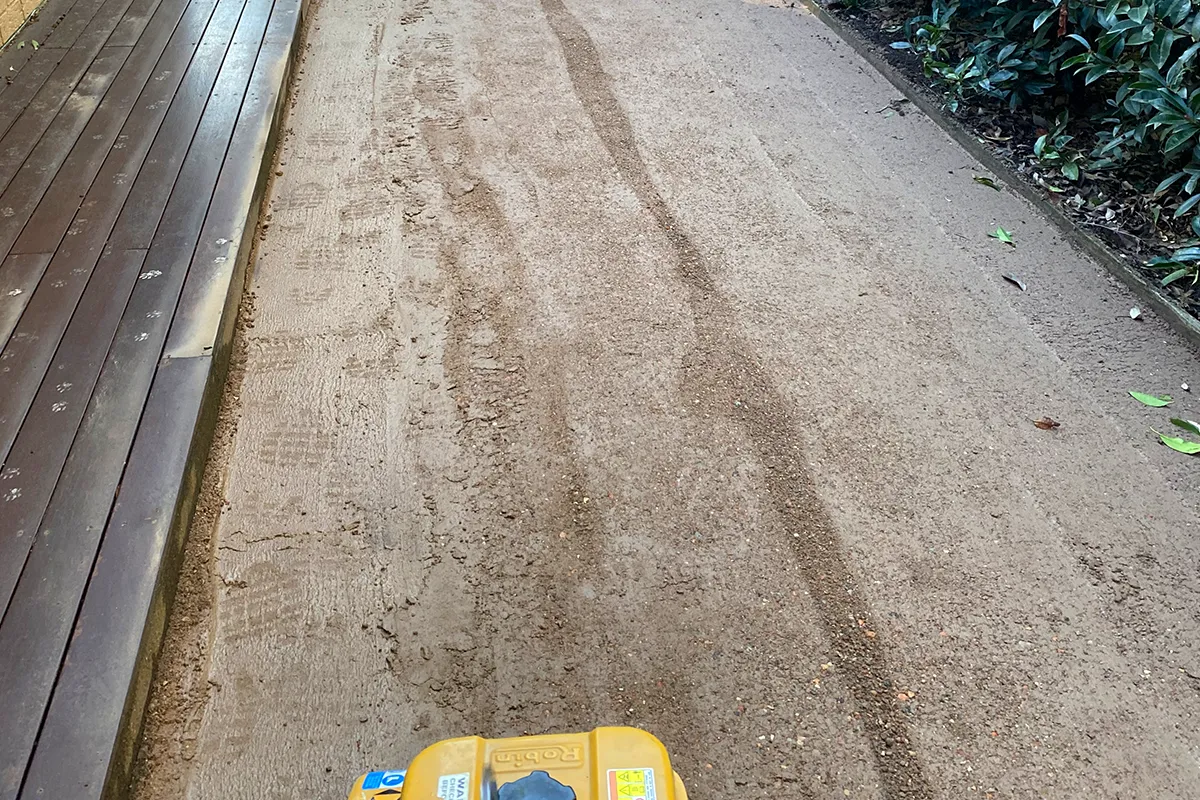
We typically make high-quality compacted artificial grass foundations out of road base (concrete and rock mixed with fine grains) or crushed bedding sand.
Compaction: Where Many Installations Fall Short
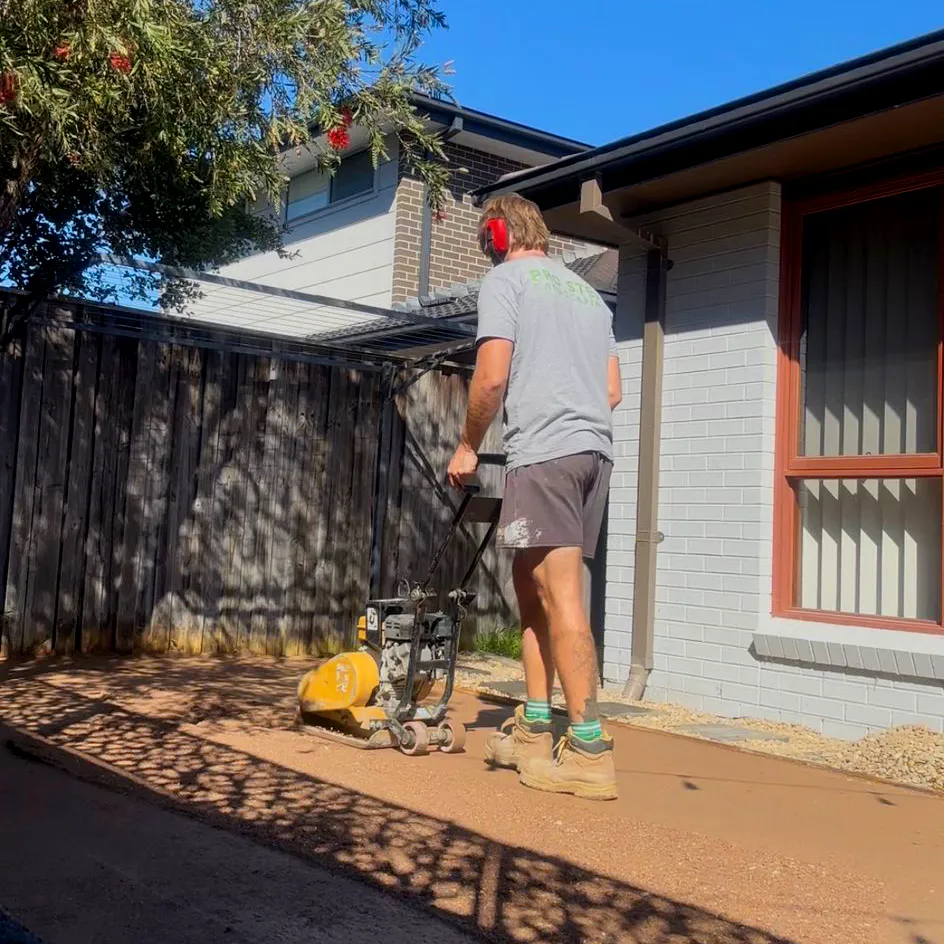
Base compaction is what makes or breaks the quality of the artificial grass installation. Even the right materials and the best quality grass won’t perform properly if they aren’t compacted correctly.
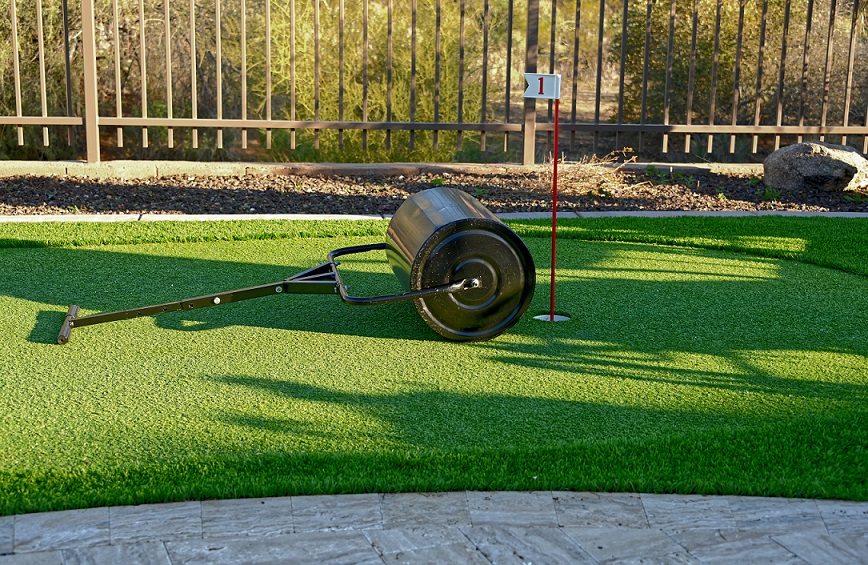
Professional artificial grass installers will compact the base in layers, not all at once. This ensures each layer locks together before the next is added.
This process takes time. But it’s essential for long-term stability.
A rushed compaction leads to:
- Soft spots
- Uneven settling
- Areas that dip or move underfoot
Drainage Is Designed, Not Left to Chance
Artificial grass doesn’t absorb water the way natural turf does. That means drainage must be planned deliberately.
A well-built base will:
- Create subtle falls
- Direct water away from buildings
- Prevent pooling beneath the surface
To the untrained eye, the lawn may look perfectly level. But underneath, it’s carefully shaped so that any rainwater or fluid that falls on it will flow elsewhere.
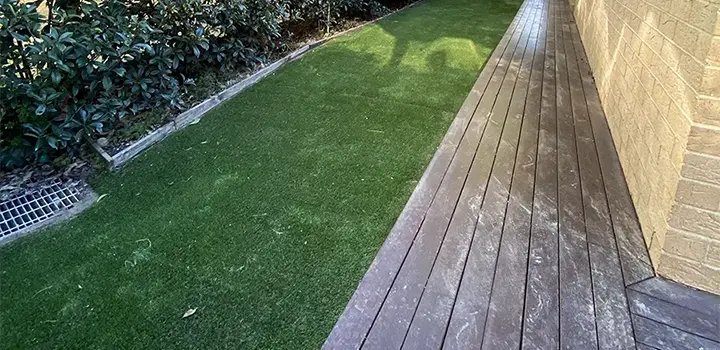
When you overlook or underestimate drainage planning, water collects under the grass. That leads to:
- Persistent dampness
- Unpleasant smells
- Premature base breakdown
Why Fixings Depend on the Base
The base doesn’t just support the grass layer. It also helps hold it in place.
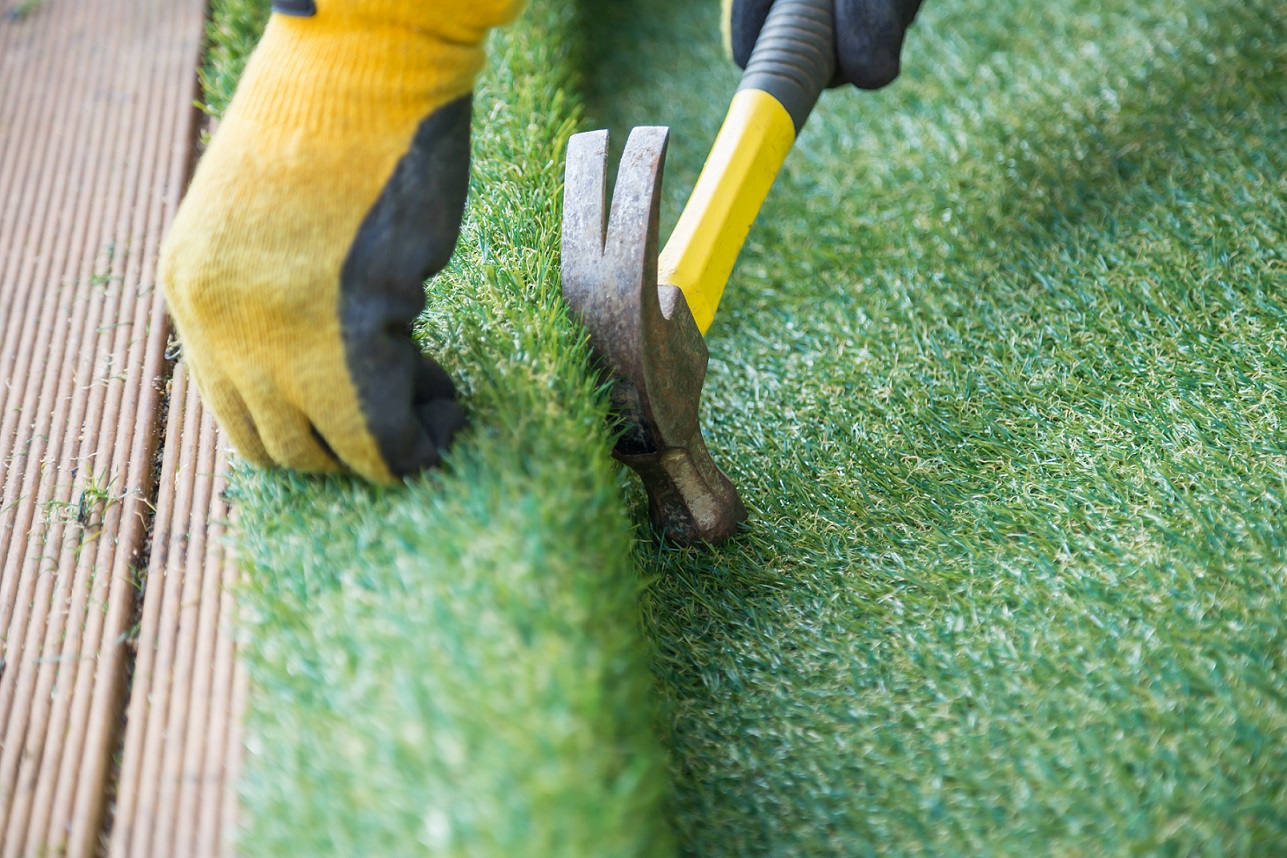
The artificial turf is attached to the base with nails and fixings. These rely on a firm, compacted base to stay secure. If the base is too loose:
- Fixings can pull out
- Edges lift
- Seams become stressed
This is why edge failures often trace back to base preparation issues, not just fixing methods.
Why These Problems Take Time to Appear
Immediately after installation:
- Everything looks flat
- The grass feels firm
- Joins appear tight
But as months pass:
- The ground settles
- Rain tests drainage paths
- Heat causes expansion and contraction
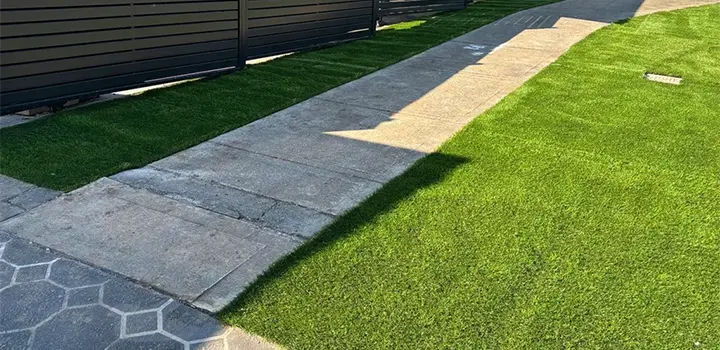
Around 6-12 months later is when the consequences of shortcuts begin to show.
This delayed failure is why base preparation matters more than the grass itself. Yet so many would-be artificial lawn owners often overlook this.
How to Tell If an Installer Takes Base Preparation Seriously
Before choosing an installer, always ask them:
- How deeply will the area be excavated? Why?
- What base materials will be used, and why?
- How is drainage handled under the grass?
- How is the base compacted?
Listen carefully to how they reply. Clear, detailed answers usually indicate experience. Vague explanations are a warning sign to not hire them!
Final Thoughts
Artificial grass can be an excellent long-term solution — but only when it’s built on a solid foundation.
The grass you see may be the feature, but the base underneath is the system. When it’s done properly, your lawn stays flat, drains well, and continues to perform year after year.
If you’re considering artificial grass installation in Sydney and want a result that lasts, it pays to focus on what’s underneath, not just what’s on top. If you need advice on your artificial grass base, get in touch with us. We’re happy to help you get the information you need.
👉 Learn more about our artificial grass installation process here:
Artificial Grass Installation in Sydney